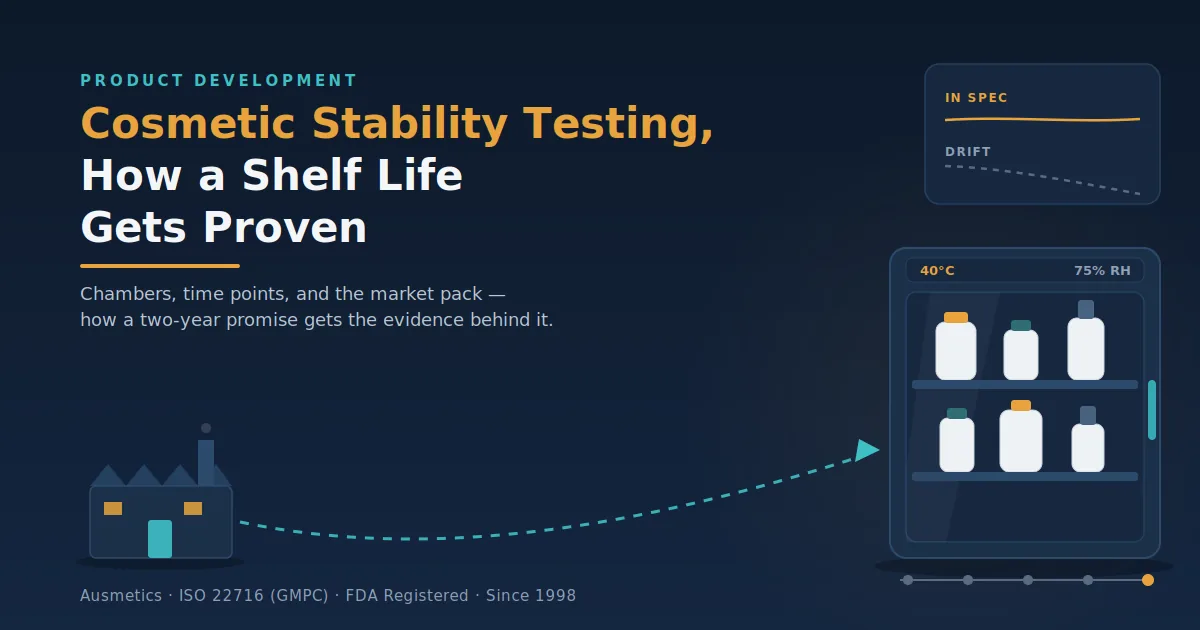
Cosmetic Stability Testing, How a Shelf Life Gets Proven
Cosmetic stability testing turns a shelf life into a promise — what accelerated aging simulates, what compatibility adds, and what buyers should ask to see.
Learn more →Beauty Manufacturing Glossary
Cosmetic stability testing turns a shelf life into a promise — what accelerated aging simulates, what compatibility adds, and what buyers should ask to see.
Learn more →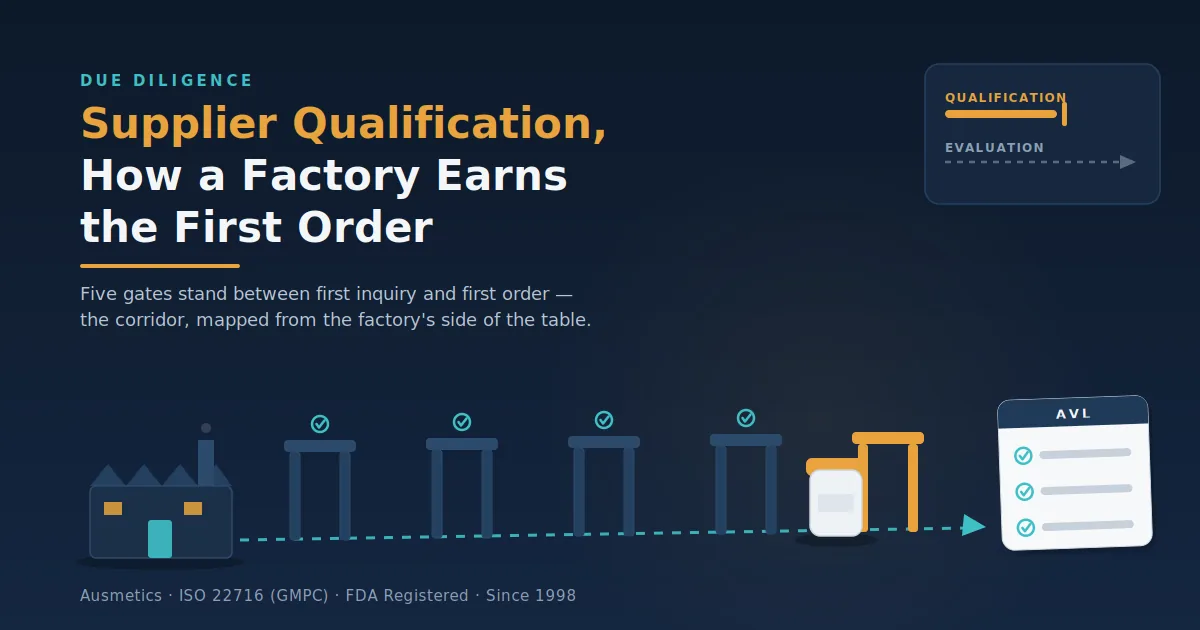
Supplier qualification is every gate between first inquiry and first order — the document pack, the audits, the samples, the trial run, and who decides.
Learn more →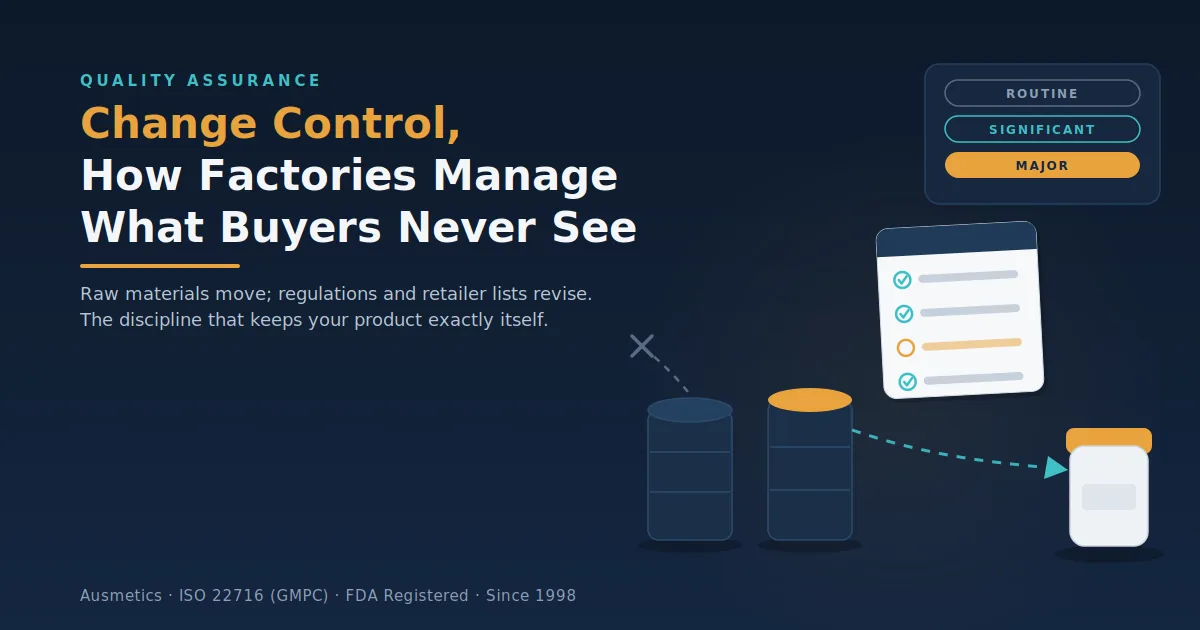
Raw materials get discontinued, suppliers change, processes move — change control is how a factory keeps your product the same, and what buyers should require.
Learn more →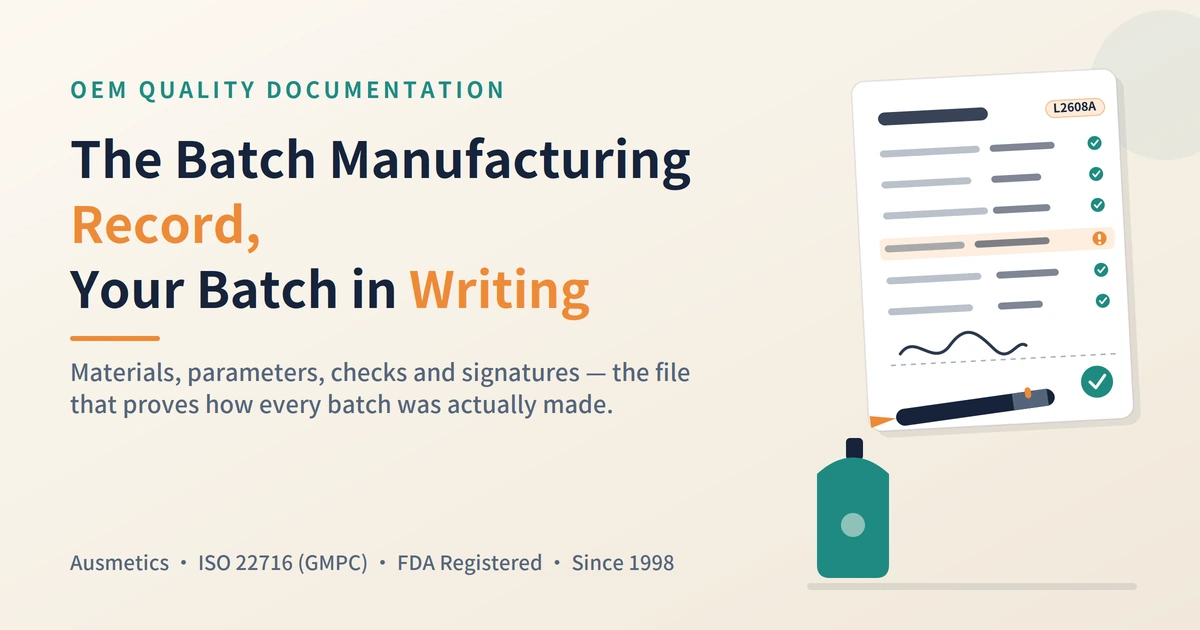
A batch manufacturing record documents how one batch was actually made — materials, parameters, checks, signatures. What is inside, and why brands care.
Learn more →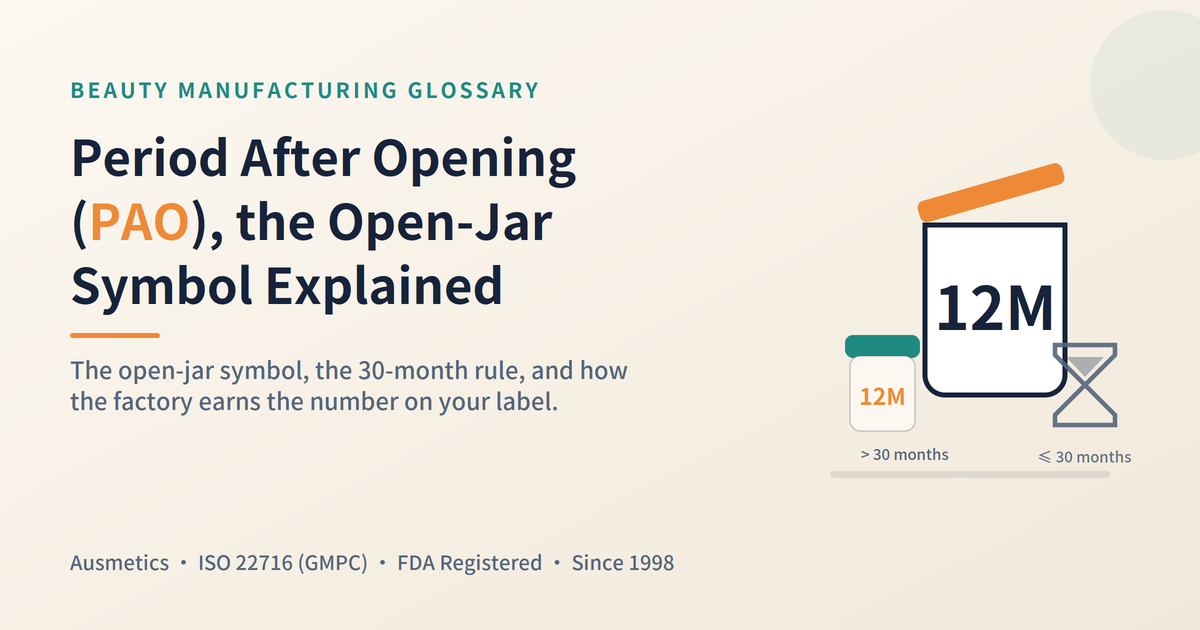
Period after opening (PAO) is the open-jar symbol on cosmetics — 6M, 12M, 24M. What the number means, who sets it, and when EU law requires it.
Learn more →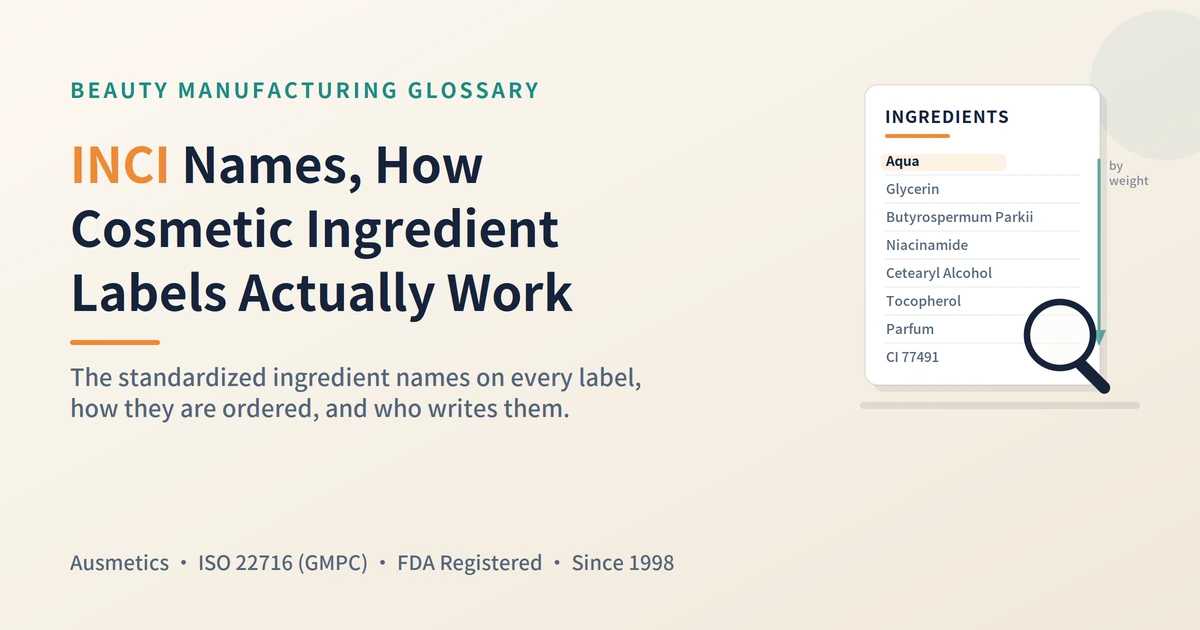
INCI names are the standardized ingredient names on every cosmetic label. How the list is ordered, who writes it, and the errors that get labels rejected.
Learn more →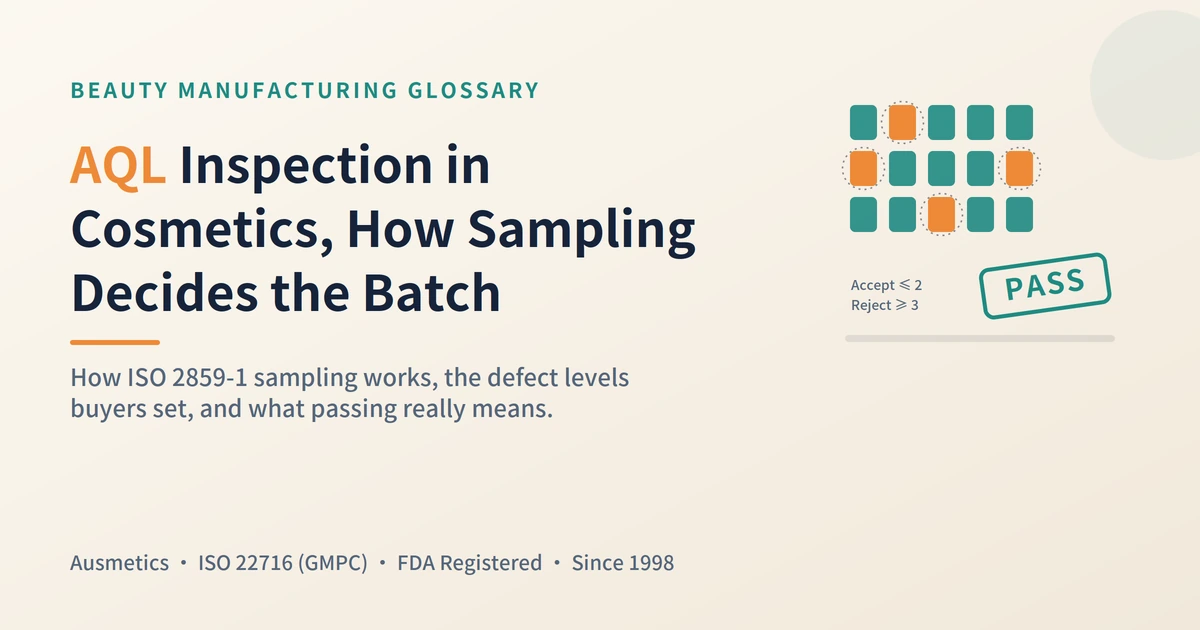
AQL inspection decides whether a production lot ships. How ISO 2859-1 sampling works, the defect levels cosmetics buyers set, and what passing really means.
Learn more →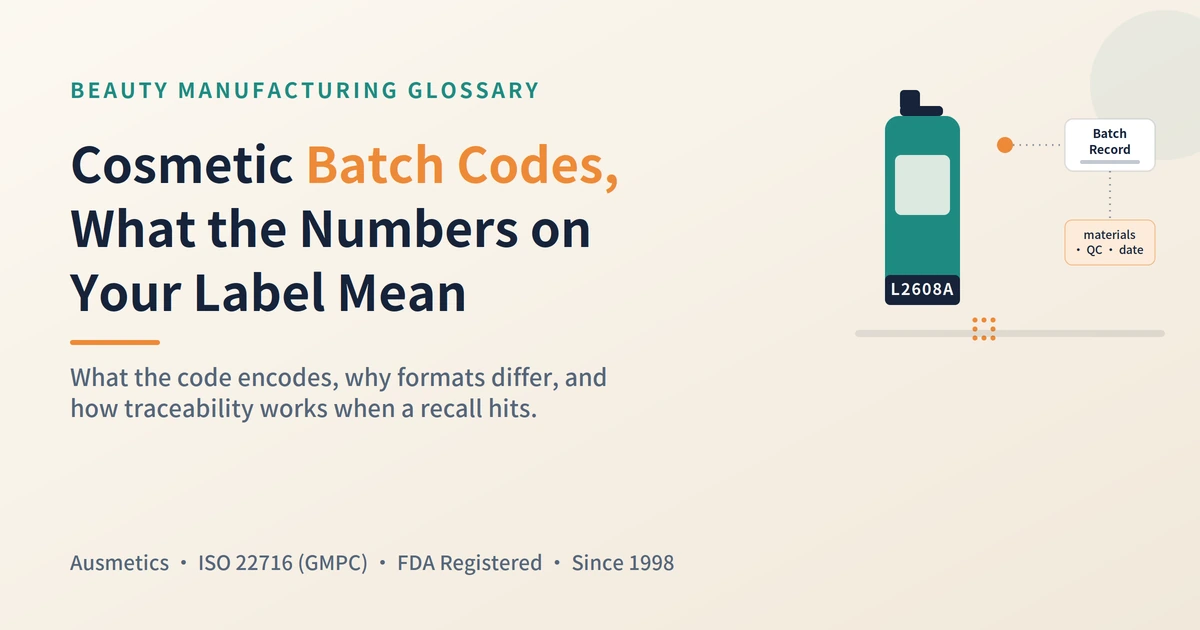
A cosmetic batch code ties every unit to its production batch. What the code encodes, why formats differ by factory, and how traceability works in a recall.
Learn more →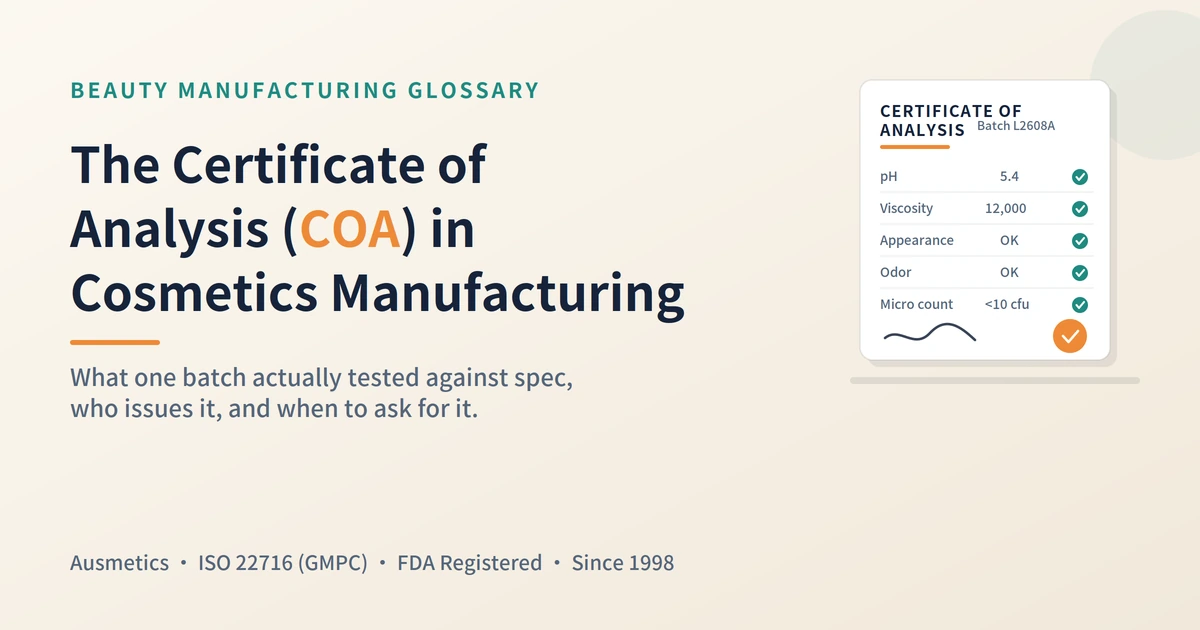
A certificate of analysis reports what one production batch actually tested — pH, viscosity, micro counts — against spec. Who issues it and when to ask.
Learn more →